


The role of interior design: everything you need to know

More than 60 percent of people feel happier in a well-designed space. Interior design affects our comfort, productivity, and even our mood daily. By understanding the basic principles, processes, and styles of interior design, you can consciously choose an interior that is not only beautiful but also truly contributes to your quality of life.
Table of Contents
- Definition and Basic Principles of Interior Design
- Key Styles and Directions in Design
- The Interior Design Process: From Idea to Realization
- Functional vs. Aesthetic Design in Practice
- Benefits and Applications of Custom Furniture
- Common Mistakes and How to Avoid Them
Key Points
| Point | Details |
|---|---|
| Interior Design as a Field | The design of interiors requires a balance between functionality and aesthetics, where creativity and technical skills are essential. |
| Design Styles and Influences | Different design movements reflect cultural and social trends, making designs contextually relevant and inspiring. |
| Interior Design Process | The design process must be user-centric and involves essential steps from user research to implementation. |
| Avoiding Mistakes | Thorough spatial analysis and attention to ergonomics are crucial to avoid common design flaws. |
Definition and Basic Principles of Interior Design
Interior design is more than just placing beautiful furniture. It is a complex field that revolves around creating functional, aesthetic, and cohesive spaces that improve people's quality of life. Interior design combines art, technology, and psychology to design environments that are both practical and inspiring.
For professionals, interior design begins with a deep understanding of fundamental design principles. As renowned providers demonstrate in their courses, this includes not only aesthetic choices but also crucial technical skills such as:
- Conceptualization of spaces
- Sketching and preliminary designs
- 3D modeling of interiors
- Professional presentation techniques
The core principles of interior design revolve around five essential elements: space, line, form, light, and color.
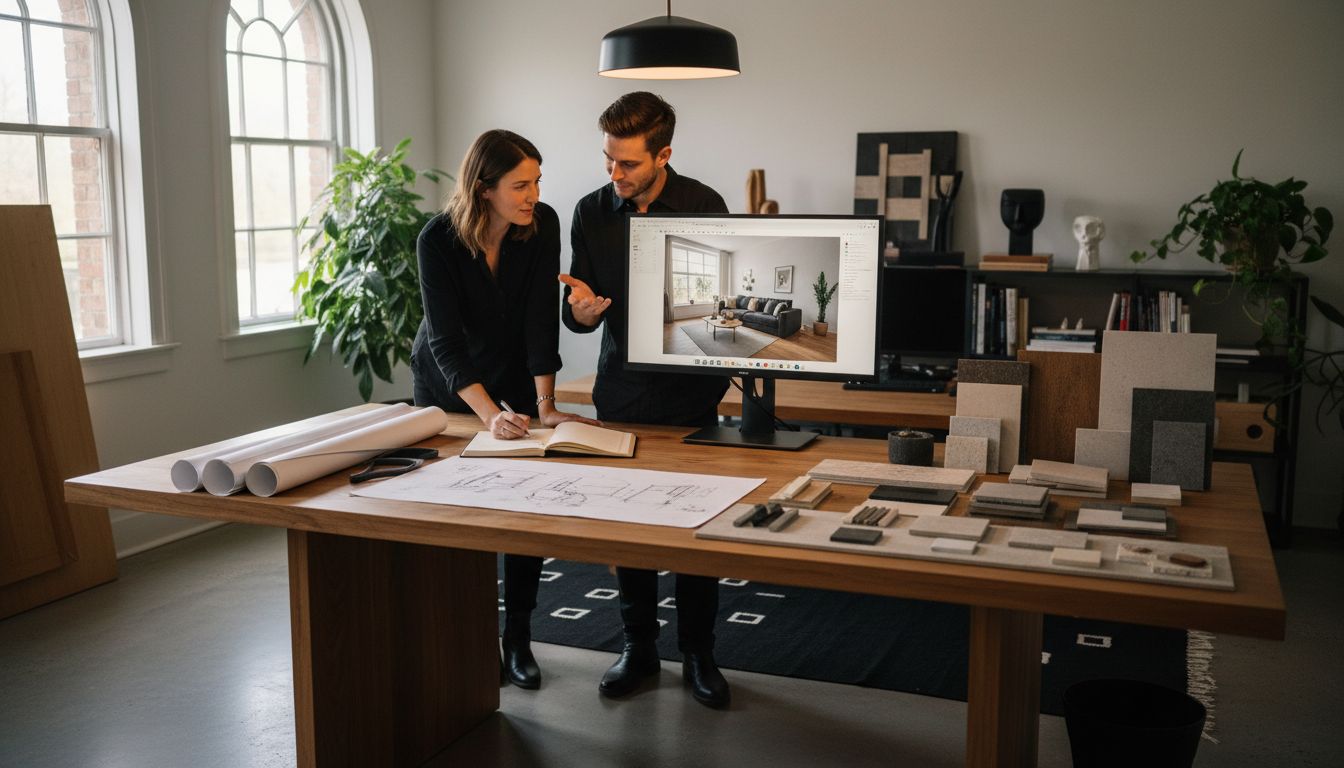 These elements work together to create a harmonious whole. For example, the spatial layout determines the flow, lines provide direction and movement, and shapes create volume and structure. The interplay between light and color then adds depth, atmosphere, and emotional resonance to a design.
Ultimately, interior design is a craft that requires creativity, technical skill, and a deep understanding of human behavior and comfort. Discover our guide on mood boards to see how professionals shape their initial design vision.
Key Styles and Directions in Design
In the world of interior design, there are countless styles, each with its unique character and philosophy. Design movements are not merely decorative trends, but reflect social, cultural, and technological developments that shape our way of life and work.
One of the most influential design movements is the Swiss Style. According to Wikipedia, this style, which emerged in the 1950s-1960s, is a unique combination of influences from the International Typographic Style, Russian Constructivism, and the Bauhaus tradition. Characteristics of this movement include:
- Minimalist graphic designs
- Use of modular grids
- Strong geometric shapes
- Emphasis on functionality and simplicity
In addition to the Swiss Style, we distinguish several other important design directions. The Scandinavian style is characterized by light colors, natural materials, and a strong belief in functionality. Art Deco, on the other hand, emphasizes luxury, geometric patterns, and opulent decorative elements. Modernist designers opt for a sleek, functional approach with clean lines and minimal ornamentation.
The evolution of interior design shows how design trends constantly change and influence each other. View our analysis of interior trends to see how these styles develop and transform over the years.
The Interior Design Process: From Idea to Realization
Transforming a space from an abstract idea into a reality is a complex and layered process that requires creativity, technical skill, and strategic thinking. Interior design is more than just choosing beautiful objects – it's about creating coherent, functional, and inspiring environments that perfectly match the user's needs and personality.
According to Utrecht University, design thinking is an iterative process that focuses on putting the user at the center. This means that every design process begins with a deep understanding of the specific wishes, lifestyle, and functionalities a space needs to fulfill. The process typically includes the following crucial steps:
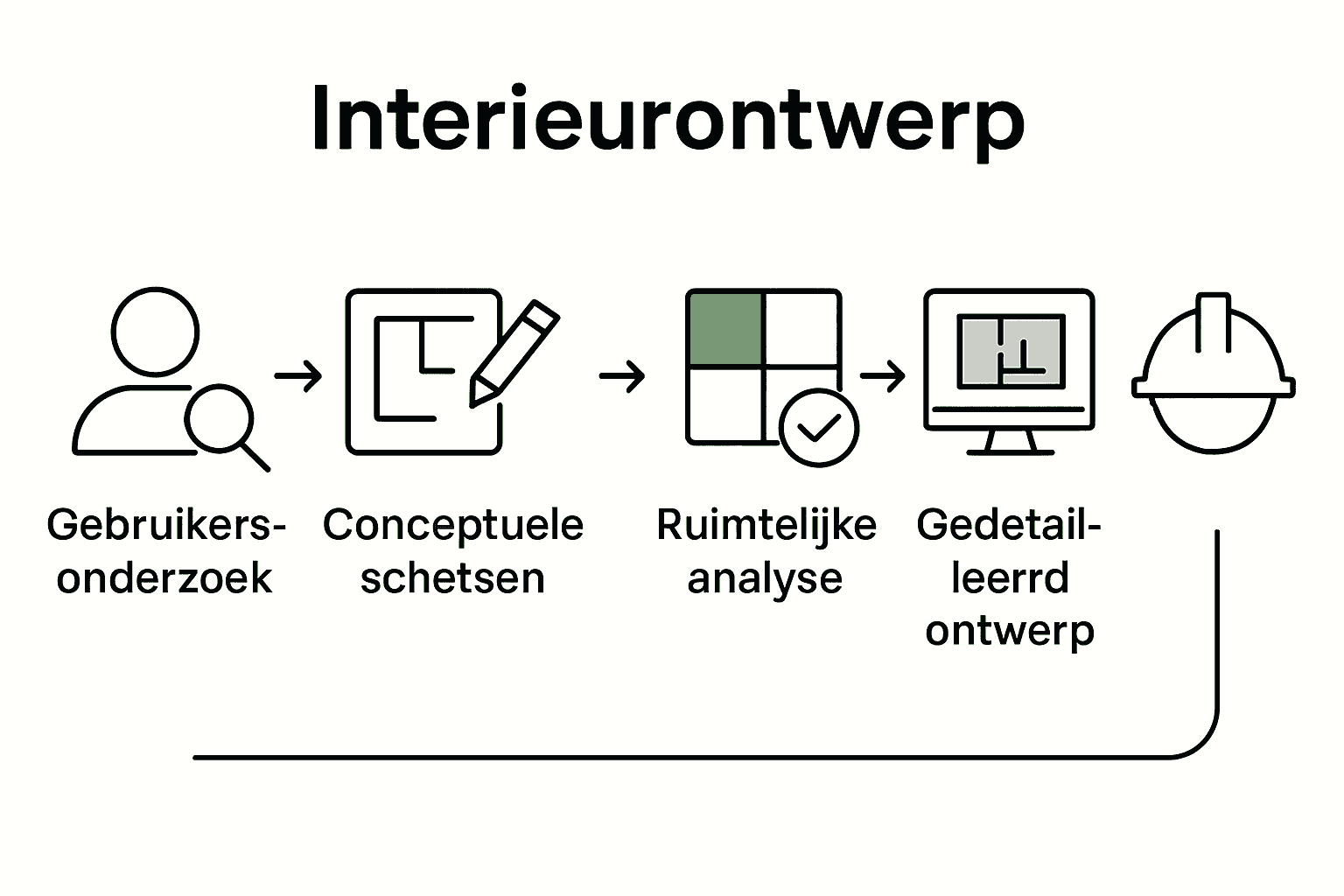
- User Research
- Conceptual Sketches
- Spatial Analysis
- Material Selection
- Detailed Design
- Implementation and Fine-tuning
Throughout each of these phases, adjustments are continuously made, evaluated, and optimized. An interior designer must not only have an eye for aesthetics but also for practical aspects such as ergonomics, light incidence, acoustics, and the emotional impact of the space. Discover how a kitchen makeover can change the atmosphere of your entire home, and you will see how even small design interventions can bring about significant transformations.
The ultimate goal of interior design is not just to create a visually appealing space, but to design an environment that feels perfect, functions flawlessly, and genuinely improves the residents' quality of life.
It is a continuous dialogue between form and function, between personal taste and universal design principles.
Functional vs. Aesthetic Design in Practice
In the world of interior design, one is constantly challenged to reconcile functionality and aesthetics. It is a subtle dance between practical needs and visual appeal, where each design must find a careful balance between what works and what looks good.
According to research by ArXiv, color harmony plays a crucial role in this balance. The way colors are combined not only influences the aesthetic experience but also the functional perception of a space. Colors can determine the atmosphere, affect spatial perception, and even subtly guide people's behavior.
The practical side of design requires a deep understanding of user needs. A kitchen should not only look good but also function efficiently. A home office must be ergonomic, have sufficient storage space, and at the same time exude calm and inspiration. Discover how wooden bathroom furniture can combine functionality and style, and you will see exactly how material, form, and function can come together.
Ultimately, good interior design is like a choreography: every movement, every element has a function, but together they create something that is more than the sum of its parts. It's about creating spaces that are both practical and inspiring, that support the user and simultaneously touch the soul.
Benefits and Applications of Custom Furniture
Custom furniture is more than just luxury products - it is the embodiment of personal expression, functionality, and high-quality craftsmanship. While standard furniture often has a uniform character, custom-made pieces offer a unique solution that perfectly matches the specific needs, space, and taste of the owner.
As Domestika emphasizes in their furniture design course, custom furniture is about more than just designing a product. It's about creating functional works of art that are tailored to the individual context. The advantages are numerous:
- Maximum space utilization
- Perfect alignment with personal taste
- High-quality materials and finish
- Durability and timelessness
- Opportunity for unique design solutions
Practical applications of custom furniture are manifold. A custom TV cabinet, for example, can have exactly the dimensions your space requires, so you don't lose valuable square meters to standard models that don't fit perfectly. Consider also a custom closet that fully utilizes an awkward corner, or a dining table that is exactly the right size for your dining room and family composition.
The ultimate goal of custom furniture is to create an environment that is both functional and personal. It's about telling your story through objects that are perfectly tailored to your life, taste, and space. Every piece of custom furniture is a small revolution in design: unique, thoughtfully crafted, and completely adapted to you.
Common Mistakes and How to Avoid Them
Interior design may seem simple, but it is a field full of subtle pitfalls that even experienced designers can struggle with. Mistakes in the design process can be costly, both in terms of time and finances, and can thoroughly disrupt the ultimate spatial experience.
As Domestika emphasizes in their furniture design course, minimizing design errors is a crucial part of the creation process. The most common mistakes occur when designers fail to consider the following aspects:
- Insufficient spatial analysis
- Ignoring ergonomic principles
- Incorrect scaling
- Lack of functional coherence
- Overvaluing aesthetics at the expense of practical usability
A common mistake, for example, is choosing furniture without first accurately measuring the available space. A custom TV cabinet can help overcome precisely those spatial challenges that standard solutions often entail. It's about looking not only at the piece of furniture itself but at the overall spatial context and how different elements interact with each other.
The ultimate lesson in interior design is simple: prevention is better than cure. Take the time for thorough preliminary research, make detailed sketches, use 3D visualization tools, and consult professionals if you have doubts. Every design process is a journey of iteration and refinement, with each step bringing you closer to that one perfect space that is both functional and breathtaking.
Discover the power of interior design with custom furniture
The article clearly highlights how interior design revolves around the perfect balance between functionality and aesthetics. Many readers recognize the challenge of making spaces not only beautiful but also practical. Custom-made furniture offers the ideal solution by precisely meeting your unique wishes and the specific dimensions of your home. This way, you prevent misplaced furniture and make optimal use of every centimeter.
Would you like to see how custom work elevates your interior? Then discover DroomHout's unique collection for yourself. With our artisanal wooden furniture, you design an environment that truly suits you. Visit our showroom in Utrecht or start online immediately and experience our user-friendly 3D configuration program at DroomHout.nl. This way, you take the first step today towards a functional and stylish interior that improves your quality of life. More about custom furniture can also be found in our inspiring articles such as custom wooden TV cabinets and how you can create a completely new look with a kitchen makeover with new kitchen fronts.
Frequently Asked Questions
What is interior design?
Interior design is the creation of functional and aesthetic spaces that improve people's quality of life by combining art, technology, and psychology.
What are the most important elements of interior design?
The five essential elements of interior design are space, line, form, light, and color. These elements must come together to create a harmonious whole.
How does the interior design process work?
The interior design process typically involves steps such as user research, conceptual sketching, spatial analysis, material selection, detailed design, and implementation.
What are the benefits of custom furniture?
Custom furniture offers advantages such as maximum space utilization, perfect alignment with personal taste, high-quality materials, and the possibility of unique design solutions.




Leave a comment